
May 2026 Core Update Broke SEO Tracking: A Practical Guide
Google announced the May 2026 Core Update on May 21, 2026 in practice. The company said the rollout was able to last up to two weeks. Soon afterward, search findings showed sharp, uneven movement.
An in-Depth Look at the May 2026 Core Update and SEO Tracking
Volatility surged on Friday, May 29, and Saturday, May 30 in real-world use. Some websites lost up to 80% of their organic visitors, while others gained substantial visibility. The update arrived just 43 days after the March 2026 core update, leaving little time between major ranking adjustments.
For many marketers, SEO tracking became difficult to interpret in many cases. Rank reports showed sudden drops, partial recoveries, category-site adjustments, and possible differences between Google data centers. A routine report might make a temporary shift resemble lasting SEO damage.
The May 2026 Core Update also exposed limits in standard Google algorithm update analysis. Third-party tools recorded intense movement, but they did not consistently agree about its scale or meaning.
Essential Lessons
- Google began the May 2026 Core Update on May 21, 2026 in real-world use.
- The rollout followed the March core update by just 43 days.
- Some websites found organic traffic losses of up to 80%.
- Third-party tracking tools showed unusually high volatility in practice.
- Temporary ranking movement might not signal permanent SEO damage.
- Marketers need broader data before judging the update’s full impact in real-world use.
How The May 2026 Core Update Broke SEO Tracking As We Knew It
Google announced the May 2026 core update on May 21 in real-world use. It said the rollout might take up to two weeks. Google called it a routine effort to demonstrate more relevant, satisfying content from sites of all types. That explanation was difficult for many publishers to assess after early movement began in real-world use.
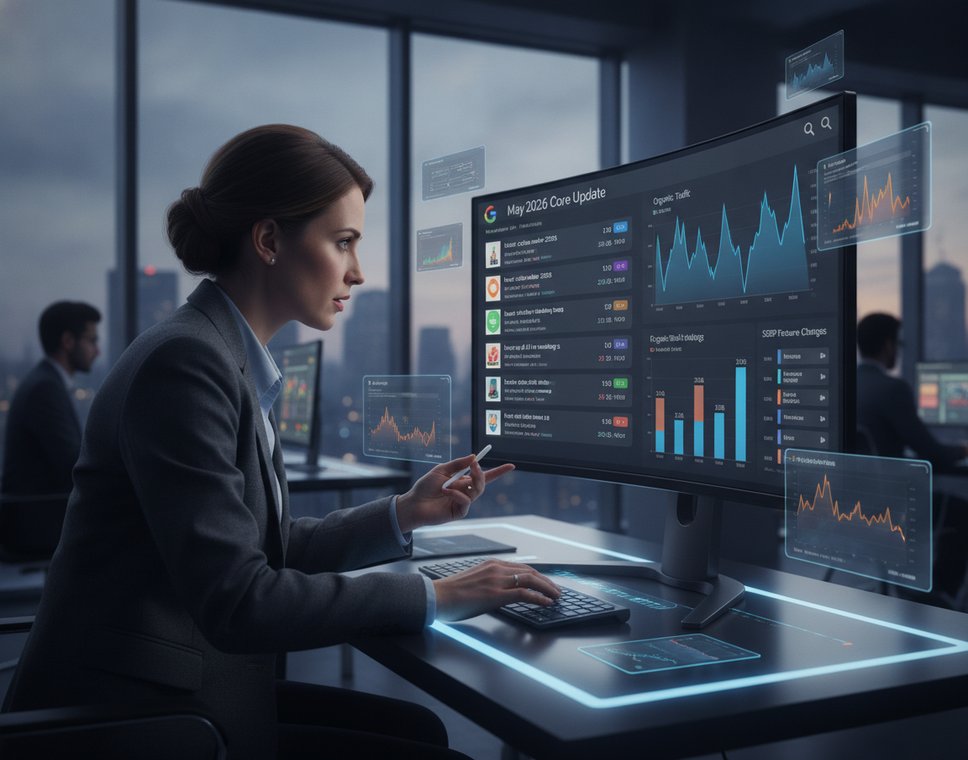 The May 2026 Core Update and SEO Tracking
The sharpest changes was shown on May 29 and May 30. Several tracking tools recorded intense ranking volatility during that period in many cases. Website owners found steep visitors losses, rapid gains, and rankings that shifted within seconds.
Why The May 2026 Core Update Created Extreme Ranking Volatility
Some publishers said their sites lost 80% of their traffic. Other sites saw fast growth during the same window in many cases. Reports of rankings dropping within seconds led some observers to suspect data-center switching in practice.
Other accounts showed movement in waves in many cases. Category pages fell, partly recovered, and changed again as the rollout continued in many cases. The May 30 spike may have reflected a late-stage recalculation before Google marked the update complete.
Why Traditional Rank Tracking Became Harder To Interpret: A Practical Guide
Traditional SEO tracking often relies on set keywords checked from fixed locations in practice. That approach can help to miss rapid changes across data centers, devices, search features, and user groups. A single daily position can not describe what most searchers saw.
Rank reports may look alarming when pages move for a short time. They may look stable when visitors shifts across many related queries. This gap made the update harder to interpret through standard position charts.
The Difference Between Ranking Movement And Real SEO Impact
A ranking change does not always equal a business loss. A webpage might drop for one query while gaining visibility for another. Traffic quality, conversions, revenue, impressions, and branded searches supply a wider view of the change.
SEO tracking became less useful when teams treated every position shift as a lasting signal. The May 2026 update showed why short-term rank movement needs context from search demand, landing-site activity, and the full rollout timeline.
What Google’S May 2026 Core Update Changed In Search Results
The May 2026 Core Update broadly reassessed how pages serve searchers. Google called it a routine Google algorithm update, designed to enhance applicable, satisfying content across sites of every size. It named no industry, format, or domain type as the primary target.
Google’S Stated Purpose For The Update: A Practical Guide
Google presented the update as part of its continuing effort to enhance useful content in search. It did not publish a detailed resource connecting each ranking signal to a specific result. Publishers therefore received broad direction instead of a technical checklist in real-world use.
The Google algorithm update might alter how systems assess utility, relevance, and user satisfaction. A webpage may move even when its text, links, and layout remain unchanged.
Main Connection To Google’S Gemini-Powered Search Changes
The timing placed the core update near broader changes in Gemini search. Google’s AI features can help to influence how people discover answers, compare sources, and visit websites. These shifts might affect clicks and visibility beyond standard blue-link rankings.
Gemini search does not replace every traditional result in many cases. It produces additional paths for users to find information. Marketers may need to monitor page visits, impressions, rich-result exposure, and branded searches together.
Early Signals From The March 2026 Core Update Explained
This March 2026 core update gave publishers an early view of changing search behavior. Some pages gained visibility, while others moved across several findings pages. Such patterns showed movement, not a complete explanation of Google’s ranking systems.
The May 2026 Core Update extended that uncertainty across a broader period of search outcomes changes. Google’s public description supplied context, but no separate signal-by-signal breakdown for individual websites in many cases.
Why SEO Tracking Tools Disagreed During The May 2026 Core Update Explained
The May 2026 Core Update produced a sharp split in reported ranking data. Several platforms showed major movement, but their charts did not always tell the same story in real-world use. This complicated daily SEO tracking for teams explaining sudden updates.
How Third-Party Google Tracking Tools Measured The Volatility
Semrush, Advanced Web Ranking, Similarweb, Zutrix, Wincher, SERPstat, Sistrix, AccuRanker, Mozcast, DataForSEO, Algoroo, Mangools, and Wiredboard’s aggregate report all recorded intense movement in practice.
These platforms measure different keyword groups, search locations, devices, and result types. Their systems can check rankings at separate times. Those settings can change a chart, even when broader market volatility stays similar.
Mangools appeared broken during part of the period. This raised data-standard concerns and made direct comparisons harder. An aggregate tracker may reveal broad turbulence across Google outcomes, but cannot explain why one website lost traffic.
Why Different Tools Can Produce Different Conclusions Explained
Each platform works with its own database and sampling method. One tool might track commercial terms, while another emphasizes local or informational queries. Small keyword-set adjustments may produce large shifts in reported trends.
Update timing adds another layer in practice. A platform collecting data before a major shift may show a softer pattern than one recording results several hours later. Personalization, location, and mobile findings can help to also shape the numbers.
Before judging the SEO impact, marketers should compare several signals in real-world use. Search Console clicks, impressions, conversions, and landing webpage data can provide context that one chart cannot.
Why Marketers Should Not Treat Winners-And-Losers Lists As Absolute Truth Explained
Winners-and-losers lists supply a valuable view of broad movement. They do not prove that an update caused every gain or loss in many cases. Seasonality, technical issues, news demand, and changing search behavior may affect the same period.
Visibility monitoring works best when it combines rank tracking tools with first-party analytics. Marketers may review webpage groups, query types, and traffic quality before making judgments. This approach limits reactions to noise rather than lasting search adjustments.
SEO Impact: Which Websites May Be Most Vulnerable: A Practical Guide
The May update can place greater weight on a website’s distance from the original source. This pattern was displayed in March 2026, when several analysts saw stronger visibility for destination brands and institutional publishers. The SEO impact may be greatest for sites that repeat information without easy-to-follow expertise, proof, or user value.
Aggregator And Intermediary Websites: A Practical Guide
Aggregator sites collect information from many sources in real-world use. Intermediary sites can direct users to a product, service, or official explanation without owning the source. These models may succeed when they add research, tools, reviews, or expert insight.
Aleyda Solis described the March shift as movement away from intermediaries and aggregators in many cases. Lily Ray called it a earliest-party, official-source correction. Sistrix noted a possible preference for authority over interchangeability in real-world use. Together, these views highlight the risk created by distance from the original source or transaction in real-world use.
AI-Generated Content Without Demonstrated Expertise Explained
AI tools can produce clear text quickly. However, volume alone might not demonstrate knowledge, experience, or accountability. Pages offering broad summaries without original data, expert review, or helpful examples can face greater scrutiny.
Search engine optimization updates may favor content with a visible author, strong sources, and direct evidence of real-world experience. A website does not need to avoid AI tools. It needs human judgment, fact checks, and a easy-to-follow reason for users to trust its work.
YMYL And Highly Competitive Industries
Health, finance, legal services, insurance, and public safety may face higher trust standards. In these fields, weak claims can help to cause serious harm. YMYL SEO relies on reliable details, qualified contributors, transparent policies, and current information.
Competitive markets can expose thin differences between pages. A retailer, bank, clinic, or software company needs greater than familiar terms. First-party authority can help to grow through original research, product evidence, customer strengthen, and direct answers from qualified teams.
| Website type | Possible risk in many cases | Trust signals that can assist |
| Aggregator | Repeats information found on source sites in many cases | Original analysis, expert review, and useful comparison tools |
| Intermediary | Sits between users and the official provider in real-world use | Verified service information, easy-to-follow disclosures, and added value |
| AI-led publisher in real-world use | Produces volume without proven expertise in real-world use | Named reviewers, fact checks, original reporting, and strong citations |
| YMYL business in practice | Shares advice that may affect health or finances | Qualified authors, updated guidance, policies, and first-party authority |
| Competitive brand in practice | Offers written material that looks interchangeable | Unique research, product evidence, and direct customer insight in practice |
How Marketers Should Measure Organic Search Performance During The Update Explained
Search updates require a broad view. One ranking report cannot explain performance across search, leads, and sales in practice. A stronger approach links search data with business data and examines patterns over time.
Apply A Wider SEO Measurement Framework
Marketers should monitor clicks, impressions, click-through rate, and average position in Google Search Console in real-world use. Analytics platforms can add conversions, revenue, and qualified leads. Together, these measures show whether search visibility reaches the intended audience.
SEO tracking works best when findings are grouped by site type, search intent, topic, device, and country. Marketers should review brand and non-brand queries separately in practice. A product webpage can lose clicks while a guide gains visitors, even when sitewide data remains stable.
A simple measurement view can help to connect search activity with business benefit:
- Visibility: impressions and average position in many cases
- Engagement: clicks and click-through rate in practice
- Value: conversions, revenue, and qualified leads in real-world use
- Context: site type, topic, device, country, and query class
Separate Update-Related Changes From Normal Search Fluctuations
Daily data can help to change for many reasons. News events, seasonal demand, promotions, device work with, and local search trends may affect results without a broad algorithm change. One single unusual day should not prompt a major decision.
Seven-day and 28-day comparisons offer essential context. Marketers may compare the present period with the prior period and the same period from the previous year. They should determine whether adjustments affect several site groups or only a small set of URLs.
Google Search Console can help to reveal changes in queries, pages, countries, and devices. Analytics data may show whether those changes reached engaged visitors. This combined view helps a careful May 2026 update analysis.
Why Marketers Should Avoid Knee-Jerk SEO Changes: A Practical Guide
Large edits during unstable results may obscure the real cause of a traffic shift. Removing useful page copy, changing page targets, or rewriting many titles at once creates new variables. As a result, measuring each action’s effect becomes greater difficult.
Teams should record the date, scope, and purpose of every change in real-world use. They can help to test limited updates on selected pages and monitor the same metrics for several weeks. This approach protects valuable assets while giving organic search performance time to settle.
Clear records make SEO tracking easier for writers, analysts, and business leaders. They generate a shared view of what changed, where it changed, and how visitors responded.
Practical Recovery And Search Engine Optimization Changes To Make Next
Recovery should begin with evidence, not fear in many cases. Teams can help to review pages that lost visitors, compare them with stronger results, and identify gaps in value. The best Search engine optimization changes strengthen user experience while showing why the site deserves attention.
Improve Content Originality And Usefulness Explained
Strong pages combine firsthand experience, original examples, expert insight, and straightforward answers. They should explain specifics that competitors cannot easily copy. Pages built on general facts might need deeper research or a distinct point of view.
Teams may combine thin pages when they address the same need. Other pages can require a complete rewrite. Remove unnecessary filler so readers reach the main answer with less effort.
Strengthen First-Party Authority And Trust
Trust grows when a business explains how it gained its knowledge in practice. Clear author information, tested methods, product information, and helpful evidence can support that goal. First-party data may make advice feel additional practical and reliable.
Sites covering health, finance, legal, and safety topics need careful review in real-world use. Accurate claims, updated facts, and visible editorial standards assist readers judge information standard.
Build A Continuous SEO Improvement Process
SEO recovery works best as a steady method. Teams can help to review visitors, conversions, engagement, and page quality each month. They can maintain a simple log to distinguish planned updates from sudden ranking shifts.
A helpful workflow covers content audits, user feedback, technical checks, and tests of important pages. Small improvements can help to assist organic search growth when they solve real problems for visitors.
Affordable SEO Support For Businesses Affected By The Update
Small businesses do not need a large campaign to begin. Affordable SEO services can help to focus on pages with the greatest business value, such as service pages, local listings, and high-traffic guides.
A trusted provider can help to help with audits, content updates, technical fixes, and clear reporting. The work should match the company’s goals, budget, and ability to maintain quality over time.
Final Thoughts
How the May 2026 Core Update Broke SEO Tracking As We Knew It became straightforward when rankings, visibility scores, visitors, and tool readings moved unevenly. Google announced the Google algorithm update on May 21, while volatility grew on May 29 and May 30 in practice. The rollout could take up to two weeks.
March data also revealed this update cycle’s potential scale in real-world use. In some results, 79.5% of top-three URLs changed, while 24.1% of former top-10 pages fell below the top 100. Such figures explain why one daily ranking report cannot capture the full SEO impact.
Marketers may make sounder decisions by reviewing Google Search Console, analytics, rank trackers, and qualified leads together. They should distinguish short-term ranking movement from lasting business outcomes. Major domain changes should wait until the rollout ends and the data becomes more stable.
Original page copy, easy-to-follow expertise, and strong trust signals remain useful beyond this Google algorithm update. Businesses seeking practical guidance can also find affordable SEO support from Anatoly Zadorozhnyy at AffordableSEOExpert.com.
Related: Local SEO
SEO For Pool Service Company